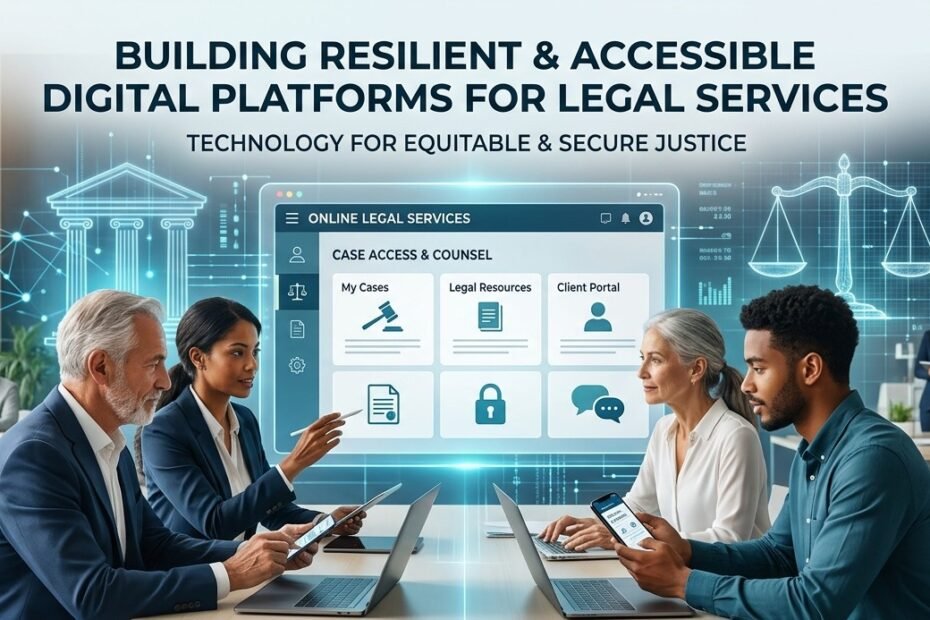
As digital transformation reshapes essential services across Australia, web developers and digital architects face a unique set of challenges. The 2025 Australian Digital Inclusion Index reveals an important reality. While the national digital divide is closing overall, approximately one in five Australians remain digitally excluded, and nearly ten percent of the population is classified as highly excluded. This exclusion disproportionately impacts vulnerable demographics, such as older residents, public housing tenants, and those in regional areas, who frequently require legal assistance. Building digital platforms for these groups is not just about aesthetics or branding. It is about creating resilient infrastructure that guarantees access to justice when people need it most. Ensuring an equitable digital experience requires developers to look beyond standard corporate web builds and embrace a socially conscious approach to technical architecture.
The Unique Demands of Legal Sector Web Architecture
When a standard corporate website experiences downtime, the primary consequence is usually a temporary loss of revenue or brand visibility. However, in the legal and nonprofit sectors, digital infrastructure failures carry far more severe implications. Community Legal Centres Australia reported that the sector was forced to turn away roughly 1,000 people per day in recent years due to surging demand and resource constraints. This staggering figure highlights the urgent need for highly efficient automated intake and triage platforms. Every second a website is unavailable could mean a missed opportunity for a domestic violence survivor seeking a restraining order or a tenant facing immediate eviction.
Establishing a baseline of functional web design is the first critical step for any technical project. Applying rigorous web development and UI/UX enhancements is crucial to ensure smooth navigation and stable infrastructure across all devices. Yet, developers working within the justice sector must take these standard technical practices a step further to account for the unique stress their users are experiencing. A well-designed user interface must prioritise clarity and immediacy, removing any unnecessary friction that could deter a vulnerable person from reaching out for help.
Creating purpose-driven infrastructure requires a deep understanding of the user context. Websites for community legal centres must function as completely fail-safe environments. These specialised platforms often serve users in acute distress. This means that slow load times, confusing navigation menus, or broken contact forms can completely sever a person from life-changing support. High availability, responsive design, and robust maintenance protocols transition from simple best practices to absolute mission-critical requirements.
Mandatory Security and Data Protection Controls
Cybercriminals are increasingly targeting the gap between well-funded enterprise corporations and budget-constrained nonprofits. Professional and legal services remain prime targets for threat actors seeking sensitive personal data. Developers tasked with building platforms for legal aid organisations must architect their systems with defence-in-depth strategies from the very beginning. Directors of nonprofits and legal centres are now legally expected to enact robust cybersecurity strategies, affirming that data protection is a core governance duty rather than just an IT afterthought. A single data breach could compromise sensitive case files, putting at-risk individuals in direct physical or financial danger. Consequently, digital agencies must treat security as the foundational pillar of their development strategy.
The regulatory expectations for protecting client data are incredibly strict. According to official regulatory guidance outlining minimum cybersecurity expectations, law practices must implement stringent technical safeguards such as strict role-based access control, full disk encryption, and regular encrypted backups to protect sensitive client data. Failing to implement these minimum cybersecurity controls can even constitute professional misconduct in certain jurisdictions. For a web developer, this means contact forms, document upload portals, and client databases cannot rely on basic security plugins. They must feature bespoke, high-level encryption and secure server architecture to safeguard confidential information.
Accessibility and Digital Inclusion by Design
Security is only one half of the equation, as a highly secure platform is useless if vulnerable populations cannot navigate it. Under the Disability Discrimination Act 1992, providing accessible digital goods and services is a legal requirement in Australia. The recent adoption of the Web Content Accessibility Guidelines (WCAG) 2.2 Level AA standard has introduced new criteria specifically designed to aid users with cognitive disabilities and mobile-device constraints. These guidelines are not merely suggestions; they are the benchmark for ensuring that individuals with varying abilities can access the same fundamental legal protections as anyone else.
To meet these rigorous accessibility and usability standards, development teams must incorporate several essential features into their build processes:
- Low-bandwidth optimisation: Nearly one in ten Australians relies solely on mobile devices to access essential services. Web assets must be streamlined to load quickly on poor network connections and older smartphone models.
- Accessible authentication: New WCAG 2.2 guidelines dictate that users should not be forced to solve complex puzzles or remember convoluted passwords without alternatives. Developers should integrate secure, alternative login options for client portals.
- Clear triage pathways: Navigation must be intuitive and direct. Users in crisis need immediate access to emergency contact numbers and straightforward intake forms without navigating through dense legal jargon. High-contrast typography and simplified menus also play a pivotal role in guiding users to the correct resources quickly.
- Screen reader compatibility: All digital forms, buttons, and downloadable resources must be properly tagged and tested with assistive technologies to ensure seamless use by visually impaired individuals.
By prioritising these technical considerations, web agencies can help bridge the digital divide. Designing highly resilient, secure, and accessible digital platforms empowers legal services to reach more people in need safely. The intersection of technical excellence and purpose-driven service delivery ultimately ensures that no Australian is left behind when seeking crucial legal support.
