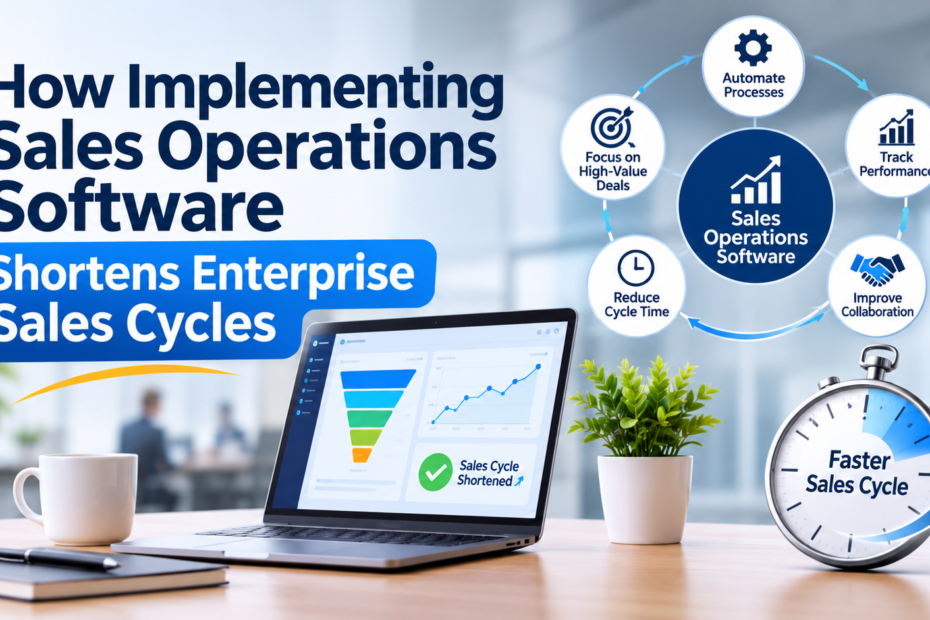
How Implementing Sales Operations Software Shortens Enterprise Sales Cycles
Enterprise sales teams often struggle with stalled deals, missed follow-ups, and the slow progress of complex opportunities. For decision-makers facing lengthy approval processes and multiple stakeholders, even a promising prospect can languish for weeks or months. When sales cycles drag on, revenue forecasts become unreliable and quarterly targets harder to achieve. The right technology can address these delays directly. By implementing advanced tools that automate repetitive steps and provide real-time insights, organizations can eliminate much of the manual work that slows down enterprise sales cycles. These solutions help teams spot pipeline roadblocks, shorten turnaround times, and close deals faster without sacrificing compliance or accuracy.
Identifying Bottlenecks in Traditional Enterprise Deal Pipelines
Manual tracking methods such as spreadsheets or isolated customer relationship management (CRM) entries often create visibility gaps in large enterprise sales processes. For example, if a sales manager relies on weekly status updates from individual reps, it’s easy to miss stalled deals or duplicate efforts. These gaps can lead to inconsistent follow-up and overlooked decision-makers—two common bottlenecks that slow down deal progression.
Implementing Sales Operations Software implementation addresses these issues by centralizing every deal’s status, stakeholder involvement, and next steps in one shared environment. Automated reminders and real-time dashboards make it clear where each opportunity stands and what actions are required. Comparing manual sales tracking vs. centralized pipeline management reveals that software-driven visibility helps teams spot delays and intervene before deals go cold.
By replacing scattered systems with a unified platform, sales leaders gain actionable insights to prioritize high-value prospects and reassign resources when bottlenecks appear. This proactive approach reduces the risk of deals stalling in approval loops or getting lost in the shuffle.
Streamlining Workflow Automation with Modern Sales Platforms
One major source of delay in enterprise sales cycles is the manual handoff between sales, legal, finance, and executive teams. Each department may require its own review or sign-off, causing deals to sit idle in inboxes for days. Modern platforms automate these workflows, routing documents and approvals to the correct stakeholders instantly.
For example, with Sales Operations Software, once a sales representative updates an opportunity’s stage, automated triggers can send notifications, generate draft contracts, or initiate credit checks without further manual intervention. This software category is designed to eliminate repetitive administrative work, freeing up sales teams to focus on client engagement and strategy.
With these automation features in place, organizations see a marked reduction in turnaround time for critical steps, helping complex deals advance through each stage of the pipeline with minimal friction.
Accelerating Proposal Generation and Enterprise Contract Closing
Custom proposal creation and contract management often introduce additional delays, as enterprise agreements require tailored terms and legal review. Traditional methods might involve copying templates, emailing drafts back and forth, and manual error checking—all of which can add days or weeks to the sales cycle.
Dedicated sales operations solutions provide configurable templates, digital signature capabilities, and integrated version control. These features enable teams to generate accurate, branded proposals and contracts in minutes, not hours. Built-in approval workflows ensure every necessary stakeholder signs off before the document goes out to a client. The efficiency of automated contract generation and approval workflows can make a measurable difference in closing times.
By reducing the manual effort required at each step, these tools help sales teams respond to client requests faster, negotiate terms more efficiently, and accelerate final signatures—all of which contribute to shortened enterprise sales cycles.
Measuring Efficiency Metrics to Validate Revenue Growth
To ensure that Sales Operations Software implementation delivers results, organizations must track key performance indicators (KPIs) directly tied to deal velocity and revenue impact. Metrics such as average deal cycle length, proposal turnaround time, and win rates provide quantifiable evidence of process improvements.
Sales operations tools typically include analytics dashboards that visualize these metrics in real time, allowing sales leaders to identify trends and adjust strategies as needed. Monitoring cycle time by deal type, sales stage, and individual rep performance gives clear insight into areas where further optimization is possible.
With these measurement capabilities, organizations can justify investment in process improvements, demonstrate ROI to stakeholders, and maintain a culture of continuous sales performance improvement.
Conclusion
Sales leaders ready to shorten their enterprise sales cycles should begin by mapping their current process and identifying steps that consistently create delays. Selecting a platform with workflow automation, centralized pipeline visibility, and robust analytics provides a practical path toward faster deal progression and more predictable revenue outcomes.

Leave a Reply