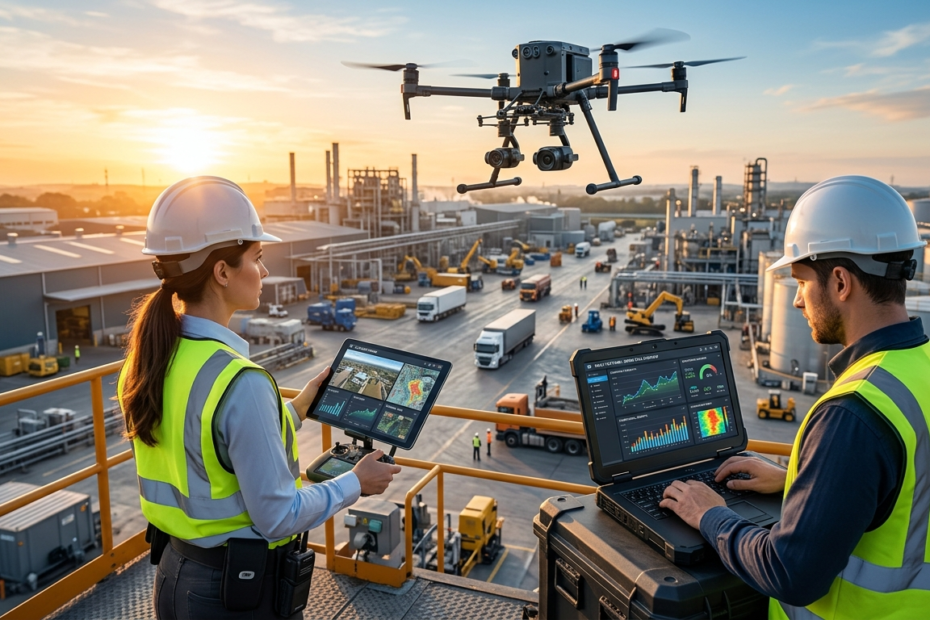
The modern enterprise landscape is undergoing a massive shift. Physical hardware and digital ecosystems are converging to create unprecedented levels of operational efficiency. Among the most transformative tools driving this change are commercial drones. While they were once viewed simply as flying cameras, today’s enterprise drones act as sophisticated mobile data centres. When paired with advanced data analytics, these devices are completely reshaping how logistics, agriculture, construction, and supply chain businesses operate on a daily basis.
The Economic Case for Aerial Intelligence
The commercial appeal of automated aerial data collection is undeniable. Businesses are moving away from manual, time-consuming inspection and delivery methods in favour of automated drone fleets. This transition is backed by significant financial data that highlights the immense potential of the industry. According to market projections from Fortune Business Insights, the global commercial drone market was valued at an estimated $13.86 billion in 2024 and is projected to grow at a compound annual growth rate of 20.8 percent through 2032. Companies across Australia and the globe are recognising that adopting this technology is not just an innovation play, but a critical requirement for maintaining competitive margins and building scalable operational networks.
Establishing a Compliant Drone Workforce
Acquiring the latest hardware is only the first step in any meaningful digital transformation. To safely and effectively harness aerial data, organisations must invest heavily in human capital. Operating commercial drones in urban or complex industrial environments requires strict adherence to aviation safety regulations set by national authorities. Unqualified operators present a massive liability risk to both the public and the company itself.
Before deploying a fleet, companies must ensure their team is fully certified and completely understands airspace regulations, risk management protocols, and comprehensive flight planning. For businesses looking to upskill their employees, sending staff to accredited drone courses in Brisbane provides the foundational training required for commercial operations. Proper certification ensures that the personnel gathering the data are operating safely, legally, and efficiently. This level of professional training ultimately protects the company’s bottom line while mitigating potential operational hazards.
Processing Massive Datasets in the Cloud
Once the physical drones are deployed and the required information is captured, the real technical work begins. Modern enterprise drones collect vast amounts of complex data. This includes high-resolution orthomosaics, LiDAR point clouds, and detailed thermal imaging. Storing and processing this raw, unstructured information requires significant technological infrastructure and careful planning.
To make sense of these massive datasets, organisations must rely on robust backend systems. Turning heavy, raw aerial data into actionable business intelligence requires immense computational power and tailored digital platforms. When designing these backend data systems, IT leaders often rely on a dedicated software development agency to build the specialized architectures and dashboards necessary to handle intensive, continuous data workloads. Scalable environments provided by industry leaders allow artificial intelligence and machine learning algorithms to analyse drone footage rapidly. This automated analysis identifies minute structural patterns or logistical bottlenecks that a human inspector might easily miss.
Key Advantages of Aerial Data Analytics
Integrating commercial drones with robust data analytics platforms offers a multitude of operational benefits. Organisations that successfully align their hardware, software, and human resources can expect to see immediate improvements across several distinct areas. The main benefits include the following critical advantages:
- Enhanced Workplace Safety: Drones eliminate the need for human workers to scale tall structures, navigate hazardous industrial sites, or enter confined spaces for routine mechanical inspections.
- Predictive Maintenance: By regularly scanning assets like pipelines, power grids, or telecommunications towers, machine learning models can detect microscopic stress fractures or thermal leaks long before they cause expensive system failures.
- Accelerated Logistics: Supply chains benefit from rapid inventory auditing in massive warehouses, as well as expedited last-mile delivery services that bypass traditional ground traffic bottlenecks.
- Optimised Resource Allocation: Project managers receive real-time topographical maps and daily progress reports. This allows them to adjust labour and material distribution with extreme precision, cutting down on wasted resources.
The Future of Automated Operations
The integration of commercial drones into everyday business operations is a prime example of how digital transformation yields tangible, real-world results. However, achieving genuine operational growth requires a highly holistic approach. It is not enough to simply purchase the physical hardware. Businesses must secure scalable cloud computing resources to process the resulting data and invest in comprehensive training for their operational personnel. By bridging the gap between physical drone technology and advanced data analytics, forward-thinking organisations are setting new operational standards for efficiency, workplace safety, and long-term profitability.
