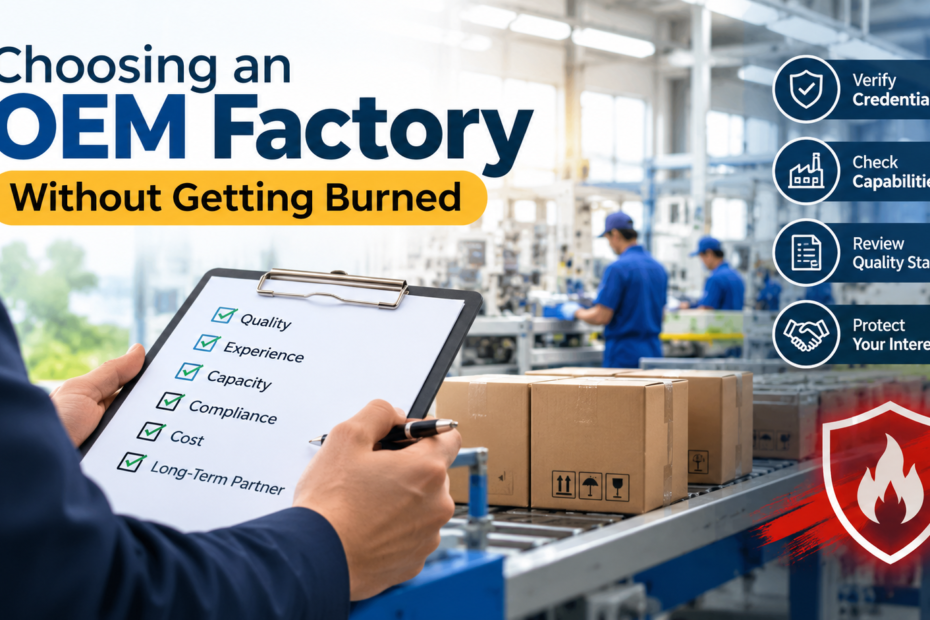
Every brand that manufactures through OEM eventually tells some version of the same story: a factory looked perfect on paper, quoted a competitive price, sent good samples and then something broke down between the deposit and the delivery. Sometimes it’s a quality slip. Sometimes it’s a missed deadline that quietly becomes three missed deadlines. Sometimes the factory simply stops responding once the balance payment is due. The pattern is common enough that it’s worth treating factory selection as a due-diligence process, not a quoting exercise.
This isn’t a reason to avoid OEM manufacturing; it remains the fastest way for a small brand to get a product to market without owning a factory. It’s a reason to vet before committing capital, not after.
A Low Quote Is a Question, Not an Answer
The instinct to select whichever factory quotes the lowest price is understandable and usually wrong. A quote sitting well below the others in a comparison set is a signal to ask why, not a reason to celebrate. Sometimes it reflects genuinely better efficiency. Often it reflects a materials substitution the factory hasn’t disclosed, a minimum order quantity that will balloon once real specifications are locked in, or a quality standard that only becomes visible in the production run rather than the sample.
The useful move is asking the low-quoting factory to explain, specifically, how their cost is lower than competitors quoting for the same specification. A clear, specific answer is reassuring. A vague one is a warning.
Check the Factory, Not Just the Sales Team
Many OEM deals are negotiated entirely through a sales or trading intermediary who may never have set foot in the factory being discussed, and may be brokering capacity from several different production lines depending on the order. This isn’t inherently dishonest, but it means the buyer’s actual counterparty, the entity legally responsible for the product, can be several steps removed from who’s on the call.
A factory audit, even a modest one done through a local inspection service rather than an in-person visit, confirms that the factory named on paper is the one actually producing the goods, has the certifications it claims, and has capacity that matches the order being discussed. Skipping this step to save a modest inspection fee is one of the more expensive shortcuts a new brand can take.
Payment Terms Are Where Leverage Actually Lives
The standard structure of a deposit to start production, balance on completion or before shipment exists because it splits risk between both parties. Buyers who pay 100% upfront to “build trust” or get a small discount are giving away the only leverage they have if something goes wrong mid-production. Buyers who refuse any deposit at all often find serious factories decline to work with them, since the factory carries the production risk in that arrangement instead.
The healthier default is negotiating milestone-based payments tied to verifiable production stages, deposit to start, a further payment after a pre-shipment inspection passes, balance on shipment rather than a simple two-payment split with no verification step in between.
What a Good Contract Actually Covers
A purchase order alone rarely protects a buyer if something goes wrong. A proper manufacturing agreement should specify the exact product specification (not just a general description), the quality acceptance criteria, what happens if an inspection fails, delivery timeline with defined consequences for delay, and critically for OEM specifically who owns the product formulation, design, or tooling once the relationship ends. Brands that skip this step often discover, if they ever want to switch factories, that the factory holds tooling or formulation details the brand assumed it owned outright.
Building the Vetting Sequence
A workable sequence looks like this: shortlist three to five factories based on initial quotes and stated capabilities, request and physically test samples from each rather than trusting photos, commission a basic factory audit for the top two candidates before committing, negotiate milestone-based payment terms, and only then sign a full agreement that covers ownership and quality recourse. Skipping ahead in this order, signing before auditing, or auditing after the deposit is already paid is exactly where the expensive lessons tend to happen.
For brands going through this for the first time, working through the vetting sequence with an established partner like One Agency Thailand often shortens the process considerably not because the fundamentals are secret, but because having already seen a hundred factory relationships go right or wrong makes the warning signs much easier to spot early, before capital is at risk.
Practical Takeaways
- Treat an unusually low quote as a question to investigate, not a reason to commit
- Verify the actual factory behind any sales intermediary before paying a deposit
- Structure payments around verifiable production milestones, not a simple deposit-and-balance split
- Get a written agreement that covers quality recourse, delivery consequences, and formulation/tooling ownership
- Follow a vetting sequence shortlist, sample, audit, negotiate terms, then sign rather than compressing steps to move faster
This article reflects general patterns observed across OEM manufacturing relationships. Specific contract terms and inspection requirements should be adapted to your product category and factory location.

Leave a Reply