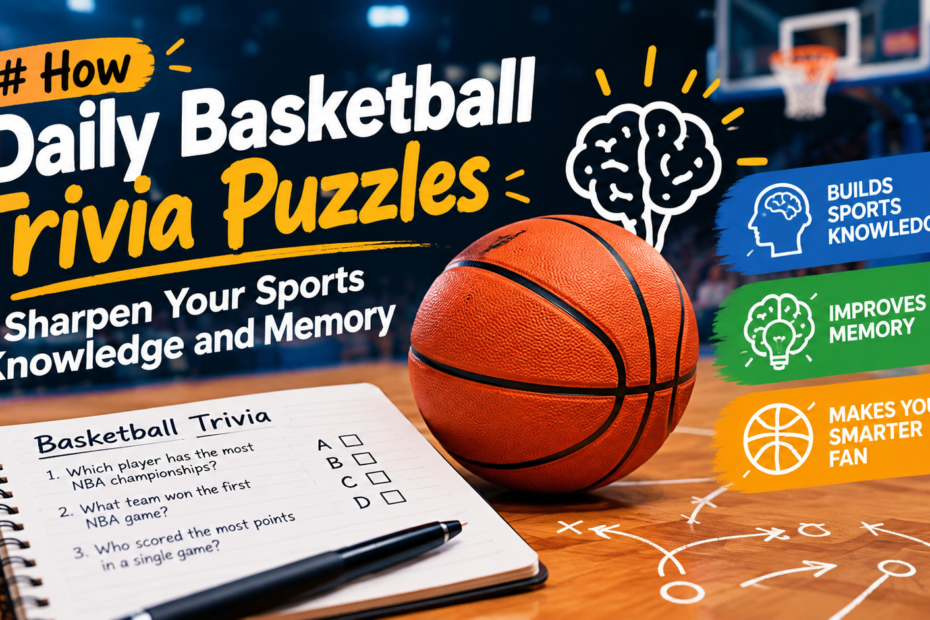
How Daily Basketball Trivia Puzzles Sharpen Your Sports Knowledge and Memory
For basketball fans today, it is not only about looking at cool moves or checking scores in the morning. The real part is when you can remember the draft classes, feel the team stories, and tell others about tough stats right away. When you practice with your mind often, you make watching or reading about basketball into a strong habit for your brain. Picking sports challenges that use facts, numbers, and fast answers helps you get to a new level with your basketball knowledge. Games that test your memory, quick thinking, and how well you can spot patterns help people build up a lot of basketball facts as they go. When you test what you know at a place like airball.gg, keeping your stats up feels good and is also fun.
The Neuroscience of Active Recall in Sports Gaming
The majority of individuals who do not stay updated with sporting activities only recognize names. Even when you believe you know the individual because you recognize his or her name from the shirt he or she wears or the articles he or she has been written about, asking him or her statistics such as his or her shooting figures in 2018 and former teammates, will be a challenge.
Daily basketball puzzles use both active recall and spaced practice. When you try to remember who had the best true shooting percentage for a time after the merger, you work the parts of your brain connected to that fact. Doing this every day helps improve your memory over the long term. It will be much easier for you to share NBA stats when you talk about sports with your friends.
4 Core Cognitive Benefits of Daily Sports Puzzles
| Cognitive Skill | Trivia Mechanism | Practical Real-World Benefit |
| Pattern Recognition | Cross-referencing player stat lines and career trajectories | Rapidly identifying team tactical shifts during live games |
| Working Memory | Holding multiple team rosters in mind while building connections | Retaining detailed data points across lengthy analytical discussions |
| Deductive Logic | Eliminating incorrect options using process-of-elimination rules | Formulating objective, data-backed sports arguments |
| Categorical Speed | Sorting players by accolades, college, and draft year against a clock | Processing fast-moving statistical commentary in real time |
3 Puzzling Styles That Expand Your Basketball IQ
Different kinds of trivia help you use different thinking skills. A mix of daily puzzle rules can help your mind get better in many ways. You can also learn about all the ages of basketball history.
1. Matrix & Grid Boards
Grid games ask people to match two things. For example, you may have to name a person who played for the Boston Celtics and got 50 or more points in a game.
- Cognitive Demand: You have to look at two things at the same time to read a chart.
- Knowledge Gain: This stops you from only thinking about people in one way. It lets you see their past in more than one way, not just as a member of their team.
2. Career Path Trajectories
These puzzles show the order in which teams, jersey numbers, and big awards are listed over time. You have to find out who the mystery player is. Try to use the least number of clues to do it.
- Cognitive Demand: You solve problems step by step and spot patterns.
- Knowledge Gain: You get to keep a clear picture in your mind of league deals and awards from many years.
3. Stat-Line Comparison Duels
The game lets people see two stat lines. There are no names on them. You need to find out which player has better true-shooting percentages. You also look at who had higher rates. Then, you check who got more win shares from stopping the other team.
- Cognitive Demand: You need to think with numbers and look things over with care.
- Knowledge Gain: The box-score numbers are shown along with real numbers. This helps fans see what modern stats mean more.
Step-by-Step: Maximizing Knowledge Retention
To make your daily trivia more helpful for remembering things, follow these three easy steps. This will turn fun games into a good way to improve your memory.
- Start with Process of Elimination: Before you make a pick, try to eliminate players by thinking about where they play, how tall they are, or what year they got picked for a team. This will make your last pick better.
- Review Missed Solutions Immediately: If you do not find the answer to a puzzle, spend about 30 seconds reading why the right answer is correct. The brain learns best right after you miss something.
- Track Your Own Progress Over Time: Write down which years in history or which numbers are hardest for you. Then read more about these things, so you know them better.
Transforming Casual Browsing into Sports Expertise
Getting involved in the daily sports challenges helps you read sports news in a new way. You do not just read the headlines. You start to pay attention to trades, numbers, and team information with better thinking. You can also find the story behind the news more quickly. When you use platforms like airball.gg every day, your basketball knowledge stays clear and fresh. You learn to think well and keep ahead of others.

Leave a Reply