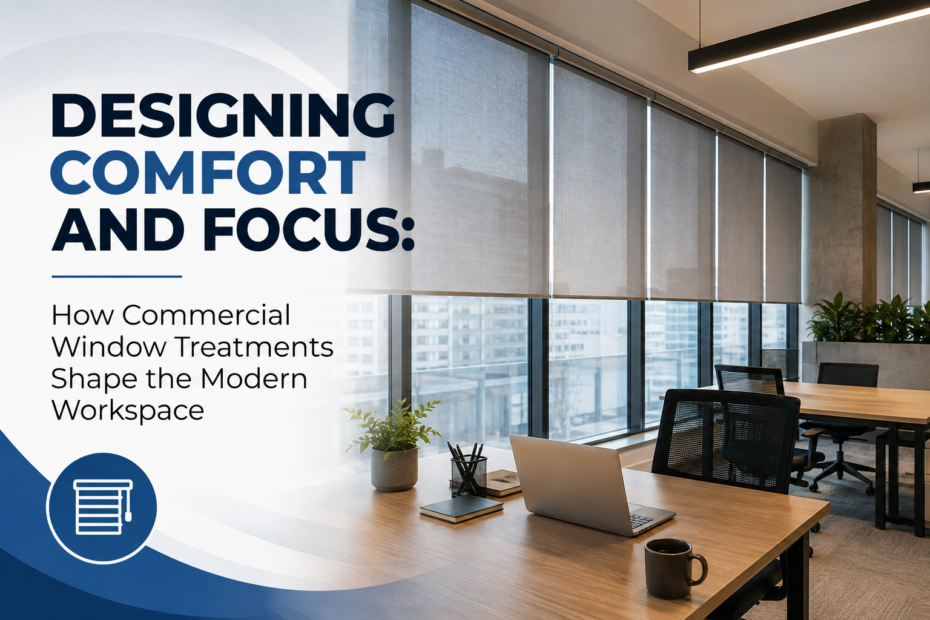
Designing Comfort and Focus: How Commercial Window Treatments Shape the Modern Workspace
Walk into a well-designed office and the light feels intentional. Screens are readable, meeting rooms are glare-free, and the afternoon sun never turns a west-facing conference room into a greenhouse. That kind of comfort rarely happens by accident. It is usually the result of thoughtful commercial window treatments, chosen for how a space is actually used rather than how it looks in an empty rendering.
For business owners and facility managers, windows are one of the most overlooked design decisions in a building. They control heat, glare, privacy, and energy costs all at once, and they quietly influence how people feel while they work. Getting them right is part aesthetics and part engineering.
Function first, then finish
In a home, window coverings are often chosen for style. In a commercial setting, the priorities flip. A workspace needs consistent daylight without hot spots on monitors, privacy for offices and clinics, and materials that hold up to daily use in a busy building. Only after those needs are met does the conversation turn to color, texture, and how the finished look reinforces a brand.
Solar screen shades, roller shades, and honeycomb shades each solve different problems. Solar screens cut glare and block heat while preserving an outward view, which suits open floor plans and storefront glass. Honeycomb shades trap air to improve insulation, a real advantage in rooms that run hot or cold. Roller shades offer a clean, uniform appearance across a wall of windows, which designers value when they want the architecture to speak instead of the fabric.
Why commercial projects deserve their own process
Commercial spaces are not just bigger versions of homes. Ceiling heights vary, window shapes are irregular, and a single miscalculation multiplied across forty windows becomes an expensive problem. That is why a serious commercial project should never start with a quick phone estimate. It starts with an on-site visit, accurate measurements, and a conversation about how each area of the building is used.
It also helps when the person who signs off on the project is part of that conversation from the start. Commercial decisions touch budget, timelines, and brand standards, and the fewer hands the information passes through, the smoother the install tends to go. A good provider will map out the whole building, room by room, before anyone talks about fabric swatches.
Local expertise in North Alabama
Huntsville and the surrounding North Alabama region bring their own challenges. Long, bright summers put real thermal load on south and west exposures, and the mix of new construction and older buildings means no two projects are identical. Working with a local, independent company that understands the regional climate makes a difference in both product selection and long-term performance.
In Huntsville, commercial window treatments from a locally owned team come with a level of accountability that national chains struggle to match. An in-house install crew, rather than rotating subcontractors, means the same people who measured the job are the ones mounting the hardware. That continuity shows up in the fit and finish.
Comfort you can measure
The payoff for a business is more than appearance. Reducing solar heat gain eases the load on HVAC systems and can trim cooling costs during peak season. Cutting glare improves screen visibility and reduces eye strain for employees who spend hours at a desk. Controlling privacy protects sensitive spaces without sealing them off from natural light. These are the quiet wins that make a building more pleasant to occupy day after day.
There is a brand dimension too. Clients and visitors read a space the moment they enter it. Crisp, well-maintained window treatments signal that a company sweeps the details, and that impression carries into how people judge the work itself.
Getting started the right way
For any commercial project, the smartest first step is a consultation that treats the building as a whole system. Measure carefully, understand the daily rhythm of each room, and match the product to the problem before choosing a finish. Handled that way, window treatments stop being an afterthought and become part of what makes a workspace comfortable, efficient, and genuinely well designed.

Leave a Reply