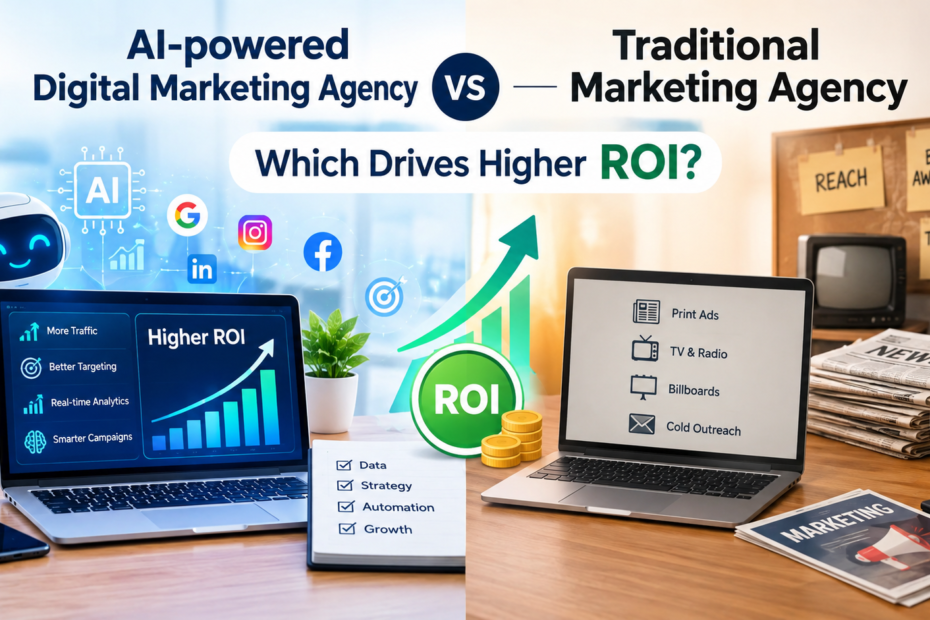
In the ever-evolving landscape of marketing, agencies are faced with a crucial decision: embrace the technological advancements of AI or stick with the tried-and-true methods of traditional marketing. The ultimate question is, which approach truly drives higher ROI? This article delves into the intricacies of both AI-powered digital marketing agencies and traditional marketing agencies, evaluating their unique advantages and potential drawbacks. By understanding the distinct methodologies behind each, businesses can make informed decisions to maximize their marketing investments.
AI-Powered Digital Marketing: Revolutionizing ROI
AI-powered digital marketing agencies are at the forefront of modern marketing strategies, leveraging advanced technologies to optimize performance and ROI. One of the significant advantages of AI is Media Buy Optimization, which allows agencies to efficiently allocate ad spend across various digital platforms based on real-time data. This precision ensures that every dollar spent is targeted towards the most effective channels, significantly enhancing ROI.
Moreover, these agencies utilize tools like Campaign KPI Dashboards to track real-time performance metrics, enabling quick adjustments to strategies as needed. This adaptability is crucial in today’s fast-paced digital world, where consumer behavior can shift rapidly. By leveraging data-driven insights, AI-powered agencies can refine their approaches to maintain high engagement levels and conversion rates.
Another key component is the use of Lead Scoring Models, which prioritize potential customers based on their likelihood to convert. This targeted approach not only increases the efficiency of marketing efforts but also boosts overall ROI by focusing resources on prospects with the highest conversion potential. For businesses seeking to enhance their digital marketing efforts, partnering with an AI-powered Digital Marketing Agency could be a strategic move.
Traditional Marketing Agencies: Strengths and Limitations
Traditional marketing agencies have long been recognized for their expertise in crafting compelling narratives and executing large-scale campaigns. Their strength lies in their ability to develop comprehensive Creative Briefs that encapsulate a brand’s vision and message, ensuring consistency across all marketing materials.
Additionally, traditional agencies excel in executing Brand Archetype Analysis, which helps businesses define their brand identity and position themselves effectively in the market. This strategic insight is invaluable for creating a lasting impression and building brand loyalty among consumers.
However, traditional agencies face limitations when it comes to real-time data analysis and rapid campaign adjustments. The reliance on historical data and longer turnaround times can hinder their ability to adapt quickly to market changes. As a result, while traditional methods remain effective for brand building, they may struggle to deliver the same level of ROI in the digital age compared to their AI-powered counterparts.
Comparative Analysis: AI vs Traditional Marketing ROI
When comparing AI-powered digital marketing agencies to traditional marketing agencies, the key differentiator lies in their ability to adapt and optimize strategies in real-time. AI-driven approaches offer superior flexibility, leveraging technologies like Cross-Channel Attribution to accurately track and analyze customer interactions across various touchpoints. This holistic view of the customer journey enables more informed decision-making, ultimately driving higher ROI.
In contrast, traditional agencies often rely on established practices, which can limit their ability to pivot quickly in response to new trends or consumer preferences. While traditional methods still hold value, particularly in branding and storytelling, the lack of real-time adaptability can impact their overall effectiveness in achieving rapid ROI improvements.
Recent studies indicate that businesses incorporating AI into their marketing strategies have reported a 30% increase in conversion rates compared to those relying solely on traditional methods. This demonstrates the potential for AI-powered agencies to deliver superior financial returns, making them a compelling choice for businesses aiming to maximize their marketing budgets.
Case Studies: Success Metrics from Both Approaches
To illustrate the effectiveness of both approaches, consider a case where a traditional marketing agency implemented a comprehensive retainer agreement to manage a multi-channel campaign for a national brand. The campaign achieved significant brand recognition, but the ROI was modest due to the high upfront costs and slower response to market shifts.
Conversely, an AI-powered agency employed a Content Pillar Strategy to drive engagement for a tech startup. By rapidly analyzing engagement data and refining content in real-time, the campaign not only boosted brand awareness but also achieved a 50% increase in lead conversions within the first quarter.
An analysis from Forrester underscores how AI-driven campaigns often outperform traditional methods in terms of immediate financial impact, highlighting the effectiveness of AI in maximizing marketing ROI.
Conclusion
AI-powered digital marketing agencies present a formidable advantage in driving higher ROI through real-time data analysis, efficient resource allocation, and adaptive strategies. While traditional marketing agencies maintain their strengths in branding and storytelling, the limitations in rapid adaptability can hinder ROI growth. For agencies striving to enhance their marketing impact, embracing AI technologies may offer the competitive edge needed in today’s dynamic market environment.
